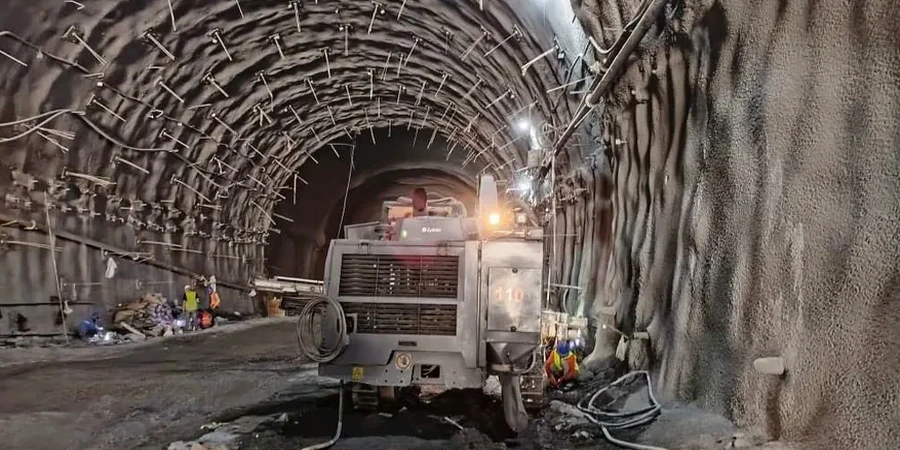
Excavation in Halifax means contending with two very different materials: dense glacial till overlying hard Cambrian-Ordovician slate of the Meguma Group. The transition zone between them is where problems start. When a shoring wall holds back saturated till above weathered bedrock, pore pressure can shift within a single tidal cycle, and the harbour's 2-metre semi-diurnal range influences groundwater levels well inland. The technical team deploys arrays of in-place inclinometers, vibrating-wire piezometers and optical survey targets to capture deformation before it becomes visible. A solid monitoring plan in this city must account for freeze-thaw action from December through March, which can temporarily mask or accelerate movement in the upper three metres of the cut. For deep foundations adjacent to sensitive heritage structures, the instrumentation package often couples with footings verification to confirm that design assumptions about bearing strata hold true once the overburden is removed.
Real-time inclinometer data from Halifax's till-bedrock transition routinely reveals deformation patterns that conventional observation would miss for weeks.
Common questions
What is the typical cost range for geotechnical excavation monitoring on a Halifax infill project?
For a standard six-month monitoring programme covering a single-shored excavation in the Halifax peninsula, budgets typically range from CA$1,160 to CA$3,150 per month depending on the number of instrument types, reading frequency and reporting requirements. Complex sites with automated total stations and multiple inclinometer arrays will fall at the upper end of this range.
How does tidal fluctuation in Halifax Harbour affect monitoring data interpretation?
The harbour's semi-diurnal tide can produce measurable pore-pressure oscillations in granular fill and fractured bedrock within roughly 300 metres of the shoreline. The monitoring plan must include at least one barometric and tidal reference sensor so that apparent groundwater changes are corrected before being compared to alert thresholds. Without this correction, a rising tide can be misinterpreted as a stability problem.
What are the NBCC requirements for retaining wall monitoring during excavation?
NBCC 2015 Part 4 requires that shoring and excavation support systems be monitored for deformation and groundwater changes throughout construction. The standard references CSA A23.3 Annex N, which specifies minimum instrumentation types based on excavation depth and proximity to adjacent structures. For cuts deeper than six metres within Halifax's urban core, the code effectively mandates inclinometers, piezometers and survey monitoring with results reviewed by a licensed professional engineer at intervals not exceeding seven days.