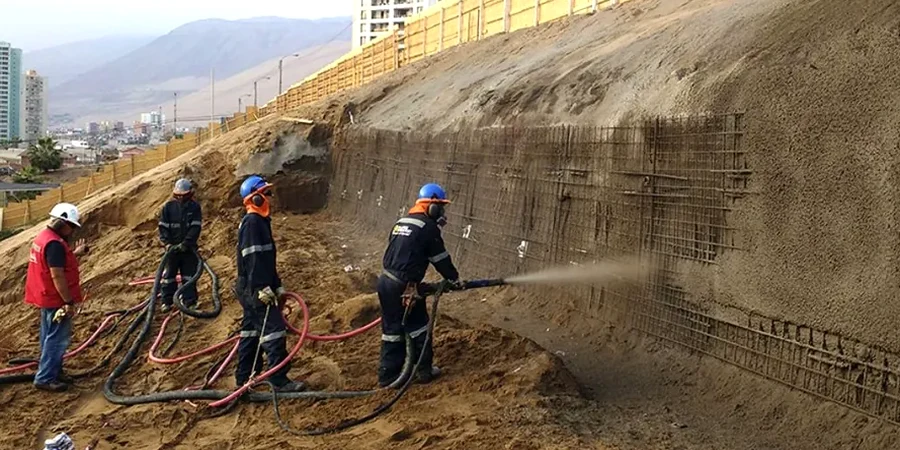
The sound of a truck-mounted CPT rig piercing through glacial till on the outskirts of Dartmouth is a familiar one for our field crews. When we mobilize for a slope stability analysis in Halifax, the equipment configuration often includes a dynamic cone penetrometer and a sampling auger capable of retrieving undisturbed Shelby tubes from depths where the dense Lawrencetown till meets the underlying bedrock. This city's topography, carved by retreating ice sheets and shaped by the tidal forces of the Atlantic, seldom offers a straightforward slope profile. Our approach combines in-situ permeability testing data from the weathered zone with laboratory shear strength parameters to model the complex pore-water pressure regimes that control stability along the Northwest Arm and within the Bedford Basin watershed.
In Halifax's drumlin terrain, the difference between a stable cut slope and a progressive failure often hinges on correctly interpreting the preconsolidation pressure of the basal till.
Regional considerations
The National Building Code of Canada (NBCC 2015) explicitly requires a geotechnical assessment for any permanent cut or fill exceeding 1.2 meters in height, a threshold easily triggered by residential developments throughout Halifax's South End and along the winding roads of Purcell's Cove. The most significant risk we document is not the failure of a single slope but the cascading effect of a rotational slump into a watercourse, triggering a violation under the Nova Scotia Environment Act. A seemingly minor slip in a backyard on a drumlin in Clayton Park can mobilize fine-grained sediment into a stormwater system feeding Chocolate Lake. The regulatory liability extends beyond the property line, and remediation costs for an uncontrolled failure—involving retaining structures, drainage redirection, and habitat restoration—can easily exceed the initial site preparation budget by a factor of five.
Regulatory framework
NBCC 2015 (National Building Code of Canada, seismic provisions for Halifax region), CSA A23.3-14 (Design of Concrete Structures, retaining wall and tie-back provisions), ASTM D4767-11 (Standard Test Method for Consolidated Undrained Triaxial Compression Test for Cohesive Soils), Nova Scotia Environment Act (regulatory compliance for erosion and sediment control adjacent to watercourses)