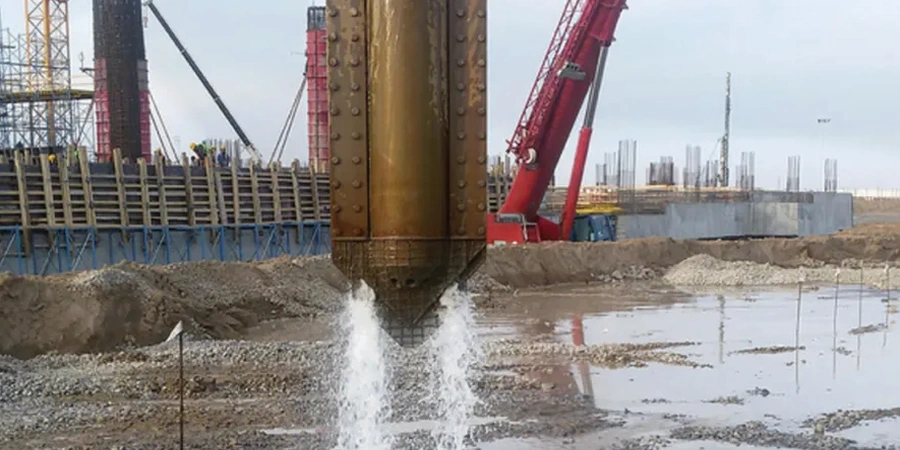
The vibrator hangs from a crawler crane at the Dartmouth side of the Basin, its steel body over 12 meters long with radial water jets flaring at the tip. That is the tool we mobilize for deep compaction in Halifax, where the post-glacial geology leaves pockets of loose sand and silty sand right below the frost line. The bedrock of the Cambro-Ordovician Meguma Group sits deep in many areas, and the overburden of stony till and outwash deposits needs densification before it can carry anything heavy. We design the grid, the dwell time, and the energy input for each site, working within the constraints of the National Building Code of Canada and the specific ground conditions of peninsular Halifax. The compaction achieved through vibratory probes reaches depths that a smooth drum roller cannot even approach, making this method essential for waterfront redevelopment and industrial pads where fill has been placed decades ago.
A properly executed vibrocompaction grid can transform loose granular fill into a competent bearing stratum without importing a single cubic meter of aggregate.