← Home · Foundations

Pile Foundation Design in Halifax: Geotechnical Engineering for Coastal Conditions

Together, we solve the challenges of tomorrow.

LEARN MORE →

A six-storey mixed-use building on Barrington Street ran into refusal at 4 meters. Glacial till over slate bedrock. The original spread footing design was scrapped. We redesigned the entire foundation system using driven H-piles socketed into bedrock. This scenario repeats across the Halifax peninsula. Glacial geology dominates. Till thickness varies from 2 to 20 meters. Bedrock is rarely flat. The CPT test we ran first revealed soft marine clay lenses that the initial site investigation missed. That data changed the pile type selection entirely. For projects near the harbour or in filled areas like the Seaport District, we integrate liquefaction assessment into every pile design. The NBCC 2020 requires it for seismic site class E and F, which cover much of the waterfront.

Halifax till is not a uniform material. Boulder frequency, clay lenses, and bedrock topography control pile behaviour more than textbook values suggest.
Process and scope

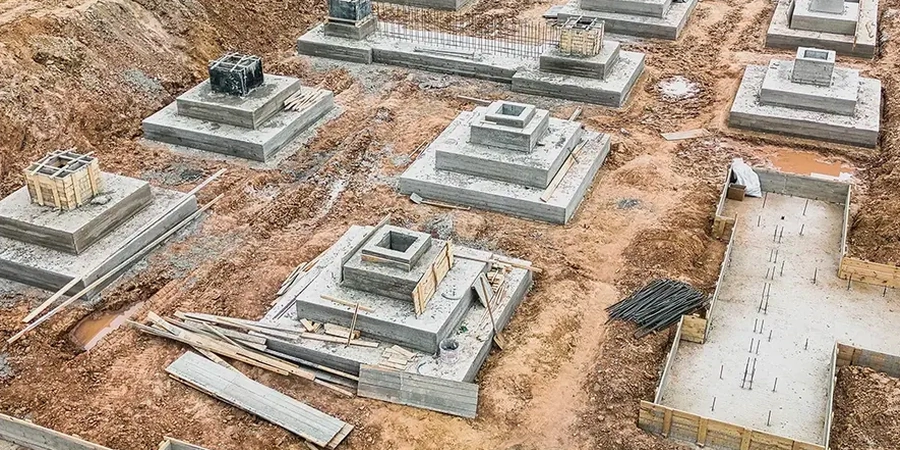
Our pile design process in Halifax relies on high-quality site investigation data. We specify hollow-stem auger borings with SPT measurements every 1.5 meters through overburden. Bedrock coring follows. The SPT drilling data feeds directly into pile capacity calculations using modified Federal Highway Administration methods for driven piles. For cast-in-place piles, we specify temporary casing through the till. The till's boulder content damages uncased holes. Skin friction in the till layer is often the limiting factor. We calculate it using beta methods calibrated to local load test data. End bearing in slate bedrock is verified through unconfined compression tests on rock core. Every design package includes a geotechnical interpretive report, pile schedule, driving criteria for driven piles, and inspection requirements during installation. Pile load testing is mandatory under NBCC for projects over 5 storeys.
Pile Foundation Design in Halifax: Geotechnical Engineering for Coastal Conditions
Technical reference image — Halifax

Local considerations

NBCC 2020 Clause 4.2.7.4 requires site-specific geotechnical investigation for all deep foundations. Halifax has specific risk factors that make this non-negotiable. Pyritic slate bedrock oxidizes when exposed. This generates sulfuric acid and can degrade concrete. We specify sulfate-resistant cement for all cast-in-place piles. Marine clay layers in the till are sensitive and lose strength when disturbed. Pile driving through these layers requires careful hammer selection to avoid excess pore pressure buildup. Bedrock surface is irregular. Slate foliation dips steeply. Piles can deflect during driving if they hit a sloping rock surface. We specify pilot holes or pre-drilling in high-risk areas. The slope stability assessment becomes critical for any pile group near the harbour shoreline or along the Northwest Arm.

Need a geotechnical assessment?

Reply within 24h.

Email: contact@geotechnicalengineering.vip

Reference parameters

ParameterTypical value
Typical pile typeDriven H-piles or drilled caissons
Overburden materialGlacial till, occasional marine clay
Bedrock typeHalifax Slate Formation (metasedimentary)
Design standardNBCC 2020, CSA A23.3, CFEM 4th Ed.
Seismic design basisSite Class C through E, Sa(0.2) variable
Typical pile capacity900 kN to 2,800 kN (service load)
Load test requirementStatic or dynamic per NBCC Clause 4.2

Other technical services

01

Geotechnical Interpretive Report

Synthesis of borehole logs, CPT data, and laboratory testing into design parameters for pile capacity and settlement analysis.

02

Pile Type Selection Study

Comparative analysis of driven piles, drilled shafts, and helical piles based on ground conditions, load requirements, and constructability in Halifax till.

03

Pile Capacity Calculation

Static analysis using modified FHWA methods with local calibration factors for skin friction in till and end bearing in slate bedrock.

04

Pile Driving Inspection

On-site monitoring using PDA testing and wave equation analysis to verify capacity and assess hammer performance in variable ground conditions.

Regulatory framework

NBCC 2020 – Division B, Part 4 (Structural Design), CSA A23.3:2019 – Design of Concrete Structures, ASTM D3966-22 – Standard Test Methods for Deep Foundation Elements Under Static Axial Compressive Load, CFEM – Canadian Foundation Engineering Manual, 4th Edition, ASTM D1143/D1143M-20 – Standard Test Methods for Deep Foundation Elements Under Static Axial Compressive Load

Common questions

What does pile foundation design cost in Halifax?
Which pile type works best in Halifax till?

Driven H-piles are most common. They penetrate till reliably and can be socketed into slate bedrock. Drilled caissons work well but require temporary casing through boulder-rich zones.

Is bedrock always reachable for end-bearing piles?

Bedrock depth varies from 2 to 20 meters across the peninsula. In some areas near the harbour, bedrock is deeper. We use CPT data to confirm depth before specifying pile lengths.

Do I need pile load testing for my project?

NBCC 2020 requires load testing for buildings over 5 storeys or when design capacity exceeds 1,500 kN. We specify either static load tests or high-strain dynamic testing with CAPWAP analysis.

Location and service area

We serve projects across Halifax and surrounding areas.

View larger map