Together, we solve the challenges of tomorrow.
LEARN MORE →
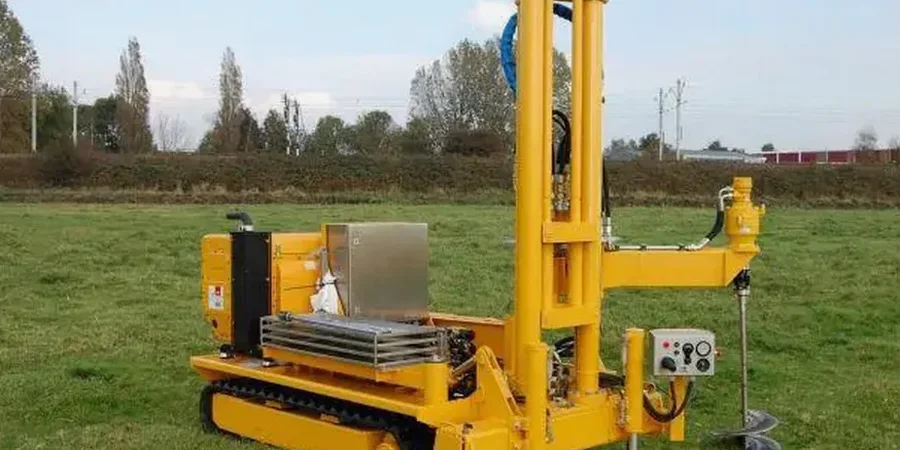
In Halifax, geotechnical investigation must contend with the region's complex glacial geology, including dense till, slate bedrock, and sensitive marine clays. A reliable CPT (Cone Penetration Test) provides continuous in-situ profiling essential for interpreting these variable subsurface conditions. All site characterization work aligns with the Canadian Foundation Engineering Manual and applicable Nova Scotia building code requirements to ensure data quality and regulatory compliance.
These investigations are critical for foundation design in residential subdivisions, coastal infrastructure, and commercial developments across the HRM. Integrating advanced CPT testing with conventional boreholes refines soil parameters for slope stability and settlement analysis. This approach de-risks projects from Dartmouth to Bedford, delivering the geotechnical certainty engineers require.
Hydraulically tensioned tiebacks for soldier pile and secant walls. Includes bond-zone calculation in Halifax slate, lock-off sequence specification, and lift-off testing protocol.
Fully grouted bar anchors designed to mobilize resistance through ground deformation. Suited for natural slopes in Bedford, clay-shale cuts along Highway 102, and waterfront stabilization.
Performance, proof, and creep testing per PTI DC35.1. We use local drilling contractors familiar with Halifax till and bedrock, and our engineers interpret the load-displacement curves on site.
CSA A23.3-14 Annex D \u2013 Anchorage, FHWA GEC No.4 \u2013 Ground Anchors and Anchored Systems, PTI DC35.1 \u2013 Recommendations for Prestressed Rock and Soil Anchors, NBCC 2015 \u2013 Structural Commentaries (earthquake restraint), ASTM A615 / A416 \u2013 Steel bar and strand specification
Active anchors are tensioned with a jack after grouting, so they apply an immediate compressive force to the wall or slope. Passive anchors aren\u2019t tensioned; they only mobilize resistance when the ground starts to move. In Halifax, we use active anchors where adjacent buildings can\u2019t tolerate any movement, and passive anchors for cut slopes where some deformation is acceptable.
It depends on the rock quality and the design load, but typical bond lengths in Halifax Group slate run between 3 and 6 metres. We verify that with a geotechnical investigation, often including core drilling and pressuremeter testing, to confirm the RQD and the bond stress capacity.
They can be, if designed with proper corrosion protection. For permanent applications we specify double encapsulation (Class I) per PTI recommendations, and we often include a monitoring plan with periodic lift-off checks to confirm the lock-off load hasn\u2019t decayed.
This service complements our laboratory testing work for a complete project analysis.