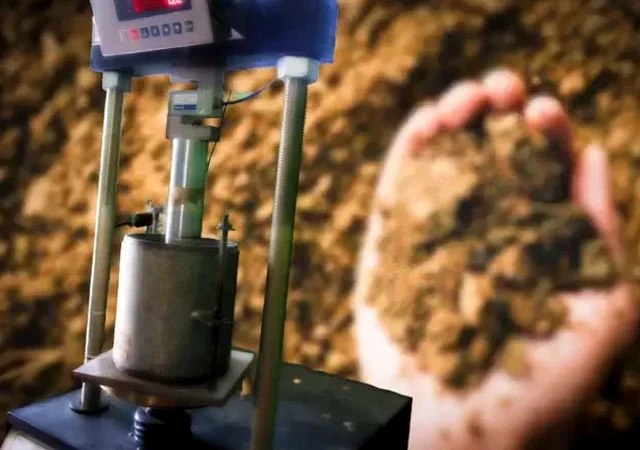
Halifax's growth from a colonial garrison into a bustling Atlantic port has left a layered legacy beneath its streets. The historic downtown sits on glacial till overlying slate bedrock, while the suburbs sprawl across drumlins shaped by the last ice age. When a contractor breaks ground on a new subdivision in Bedford or a commercial lot in Burnside, the soil's load-bearing capacity dictates everything from pavement thickness to material selection. That's where the CBR test becomes essential, providing a direct measure of subgrade strength that feeds into the AASHTO 1993 pavement design method. Our laboratory CBR test gives engineers the soaked and unsoaked values needed to design flexible and rigid pavements that withstand Halifax’s punishing freeze-thaw cycles without premature rutting. We process samples from across the Halifax Regional Municipality, ensuring the results reflect local moisture conditions that can saturate silty tills during spring melt.
A soaked CBR value below 3% on a Halifax glacial till means you’re building on a sponge—stabilization or over-excavation becomes non-negotiable.