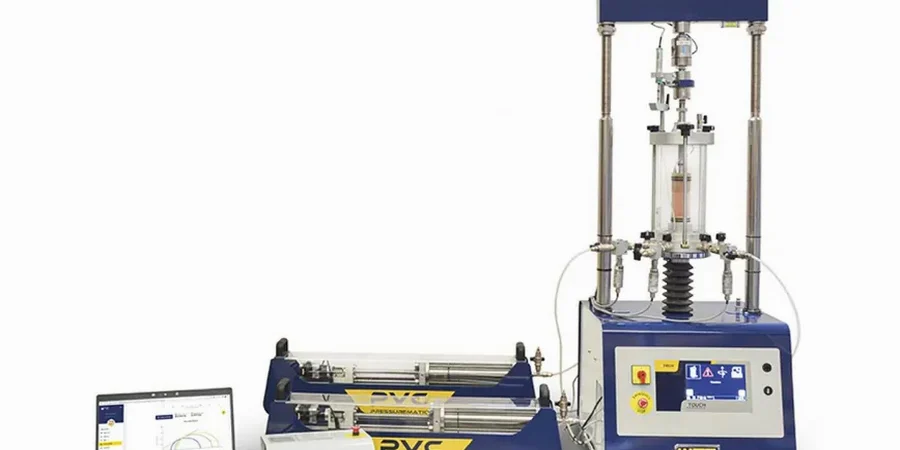
A triaxial cell pressurizes a cylindrical soil specimen inside a transparent chamber, applying controlled confining stress while an axial piston shears the sample at a constant strain rate. In Halifax, where dense glacial till overlies slate bedrock and harbor-side fills contain variable organics, extracting undisturbed Shelby tube samples from depths of 5 to 25 meters is standard practice before running a consolidated-undrained triaxial program. The cell mimics the in-situ stress state that a foundation element experiences beneath a mid-rise structure on Barrington Street or a waterfront development along the Bedford Basin. Pore pressure transducers record excess pressure during undrained shear, giving the design team effective stress friction angles that feed directly into bearing capacity calculations under NBCC 2015 and CSA A23.3 requirements.
Effective stress friction angles from a properly saturated triaxial test are the difference between a footing that performs and one that settles differentially in Halifax till.